
Certified second-generation ethanol, produced in southern Brazil for export.
Ciklico is a Brazilian producer of neutral hydrous 2G ethanol made from agro-industrial co-products. We supply the cosmetics, fragrance, home care and fine-chemical industries, and the European renewable-fuel market, with a product whose origin, purity and carbon footprint are documented batch by batch.
Alcohol content of 96% v/v or above, with very low methanol and aldehydes, verified by chromatography on every batch.
One plant, identified suppliers, a mass-balance system and a certificate of analysis for every lot.
82.8% lower greenhouse-gas emissions than the fossil reference, calculated under ISCC EU 205 and submitted for third-party verification.
Who we are
A producer, not a trader. We own and operate our plant, run our own laboratory and sell what we make.
Ciklico Soluções Sustentáveis S.A. was built on a simple proposition: the industries that use ethanol as an ingredient increasingly need to prove where it comes from and what it costs the climate. We produce a second-generation ethanol that answers both questions with documents.
Our plant in Rio Grande do Sul is licensed for ethanol production, with a licence that allows up to 10.5 million litres a year at the current site. We grow in modules within that licence, and further plants are planned close to our feedstock sources. We say certified only when the certificate has been issued.
Our ethanol is sold for export; domestic ethanol sales are occasional and serve control, certification and testing purposes. The process also yields distillers grains, WDG and DDG, which we sell to the Brazilian animal-nutrition market. Production is scheduled against long-term supply agreements, and each ethanol shipment leaves the plant with its certificate of analysis and its ISCC sustainability declaration.
Status, October 2026:
Markets we serve
Ethanol for five export markets, each with the documentation it needs; distillers grains for animal nutrition in Brazil.
Cosmetics and personal care
Perfumes, lotions, deodorants and hair care. Neutral grade with a traceable 2G origin to support ingredient and sustainability claims.
Fine fragrance
No residual odour and very low aldehydes and esters, so the alcohol never competes with the composition.
Home care and hygiene
Cleaning products, disinfectants and gels, with a measurable scope 3 reduction for the manufacturer.
Fine chemicals and bioplastics
A bio-circular solvent and intermediate for chains that need a certified mass balance.
Renewable fuel
Certified 2G ethanol for the European market under the Renewable Energy Directive.
Animal nutrition
Distillers grains from our process, wet (WDG) and dried (DDG), a protein-rich feed sold to livestock producers in Brazil.
Neutral hydrous 2G ethanol
A colourless, clear, neutral ethanol of agro-industrial origin, with no origin markers. Supplied undenatured; denaturation to the buyer's specification on request.
| Parameter | Sales specification |
|---|---|
| Alcohol content | ≥ 96.1 % v/v |
| Density at 20 °C | ≤ 0.8071 g/cm³ |
| Acidity as acetic acid | ≤ 10 mg/L |
| Methanol | ≤ 25 mg/L |
| Acetaldehyde | ≤ 10 mg/L |
| Acetone, ethyl acetate, benzene | not detected |
| Appearance | Colourless, clear, characteristic odour |
Documentation supplied
Quality and certification
Quality is a system, not a slogan: a laboratory, a method for every parameter, a record for every batch and an independent certification body.
In-house laboratory
Every batch is analysed before release: alcohol content, density, acidity, conductivity, permanganate time and a chromatographic impurity profile, following NBR and ASTM methods under a CREA-registered technical manager.
Traceability and mass balance
Feedstock receipts, process records and product lots are linked in a mass-balance system built to ISCC requirements, so the origin of every shipment can be demonstrated to a customer or an auditor.
ISCC EU and ISCC PLUS
Our certification body is Control Union. ISCC EU covers the renewable-fuel market under the Renewable Energy Directive; ISCC PLUS covers chemical and cosmetic applications. We state certification only once the certificate is issued.
82.8% below the fossil reference
Total emissions of 16.21 gCO₂eq/MJ against 94 for the fossil comparator, calculated with actual plant data under the ISCC EU 205 methodology and including transport to Rotterdam.
No dedicated crop, no additional land
Our feedstock is an agro-industrial co-product classified as a residue under ISCC EU. It carries no cultivation emissions and competes with no food crop.
Nothing is left behind
The solids and stillage from fermentation become distillers grains, WDG and DDG, sold as animal feed. The process has no waste stream to dispose of.
A figure your auditor can use
The calculation follows ISCC EU 205 with actual values and is submitted for verification by the certification body, so it can enter a customer's scope 3 inventory.
Plant and logistics
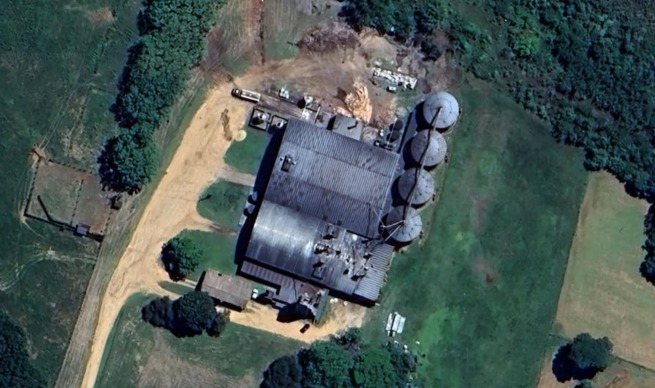
A licensed industrial site in the interior of Rio Grande do Sul, 200 km from the Port of Rio Grande and 320 km from Porto Alegre.
Questions buyers ask
Short answers to the questions we hear first.
What does second-generation mean here?
Ethanol made from co-products of an existing agro-industrial chain rather than from a crop grown for the purpose. No additional land is planted, and the feedstock is classified as a residue under ISCC EU.
Is Ciklico ISCC certified?
Do you sell in Brazil?
Ethanol is sold for export; domestic ethanol sales are occasional and serve control, certification and testing purposes. Our distillers grains (WDG and DDG) are sold in Brazil to the animal-nutrition market.
How do we qualify the product?
Request a qualification sample and the certificate of analysis. We provide technical data, the GHG calculation and plant documentation, and we receive technical visits by appointment.
What volumes are available?
Production is scheduled against long-term supply agreements with minimum annual volumes. The current site is licensed for up to 10.5 million litres a year and further plants are planned; availability and schedule are agreed case by case.
Can the product be denatured?
Yes. The product is supplied undenatured by default; denaturation to the destination market's requirements can be agreed in the supply contract.
Contact
For samples, documentation, supply enquiries or a plant visit, write to us. We answer in English, Portuguese, French or Dutch.
Estrada Corredor do Mudador, 100
Santa Margarida do Sul, RS, 97335-000, Brazil
Ethanol sales for export; WDG and DDG sold in Brazil. Price and terms are provided in an individual commercial proposal after technical qualification.